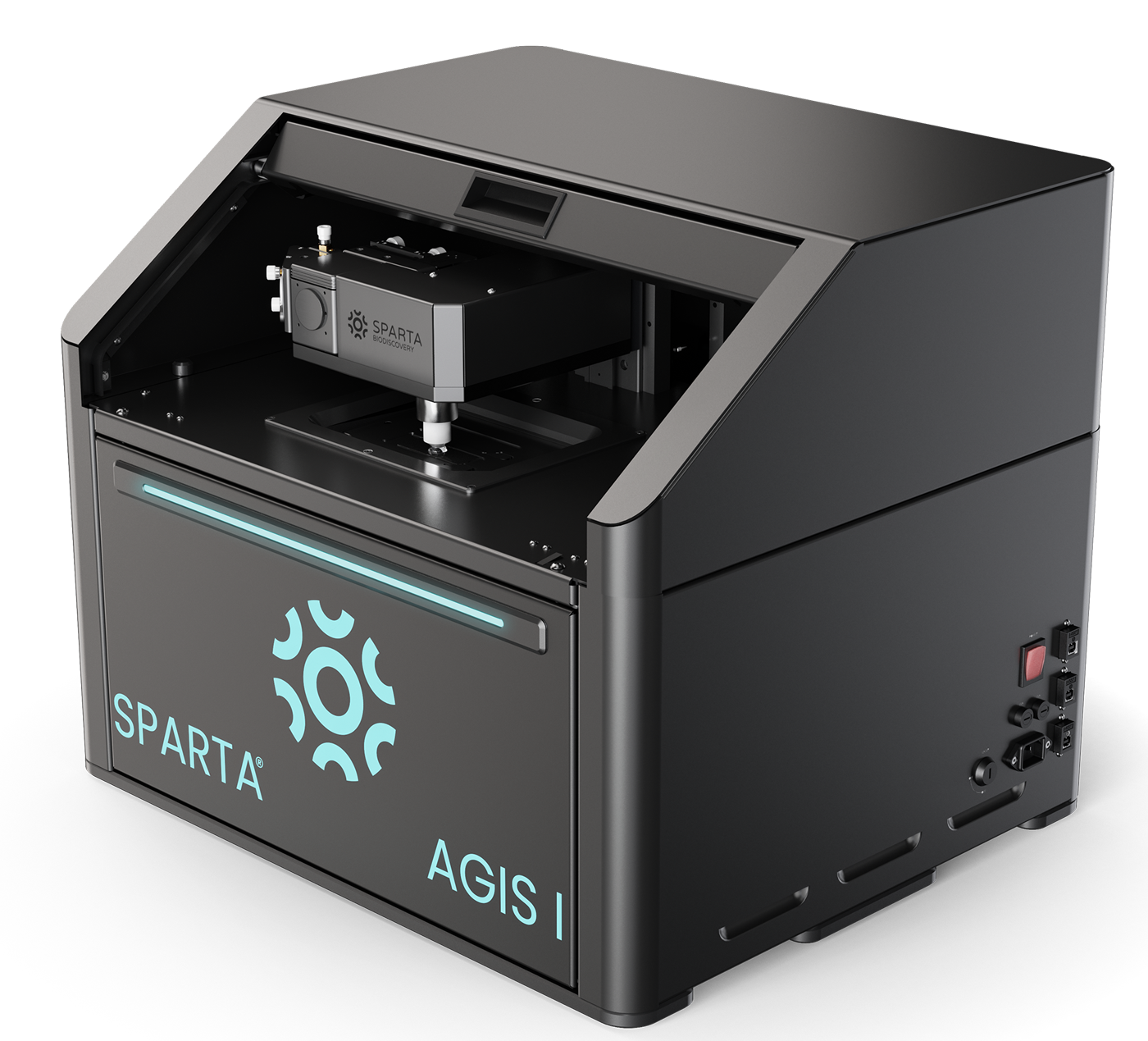
Case study – Confirming true hybrid extracellular vesicles (HEVs) for mRNA delivery with single-particle, label-free analysis

SPARTA® reveals single-particle composition of HEVs to confirm extracellular vesicle (EV) and lipid nanoparticle (LNP) fusion
Messenger RNA (mRNA) therapeutics have enormous potential, but their success depends on delivery systems that can efficiently load mRNA and deliver it to target cells. Hybrid extracellular vesicles (HEVs), formed by fusing extracellular vesicle (EVs) and lipid nanoparticle (LNPs), offer a promising solution, but confirming true hybridisation in these highly complex systems is difficult using conventional analytical methods. In this study, researchers at AstraZeneca used SPARTA® to perform single-particle, label-free compositional analysis, overcoming the limitations of other methods and enabling them to confirm true fusion and reveal heterogeneity.
The challenge
EVs are attractive delivery vehicles for therapeutics due to their biocompatibility, good biodistribution, and low toxicity, but they are notoriously difficult to load with large nucleic acids such as mRNA. LNPs in contrast, enable efficient mRNA loading and delivery into cells, but come with safety and targeting concerns.
To combine the strengths of both types of nanoparticles and overcome their limitations, researchers at AstraZeneca developed HEVS by fusing mRNA-loaded LNPs with EVs (Fig 1). But they needed to confirm whether they had genuinely produced true hybrid nanoparticles by analysing the composition of individual HEVs.
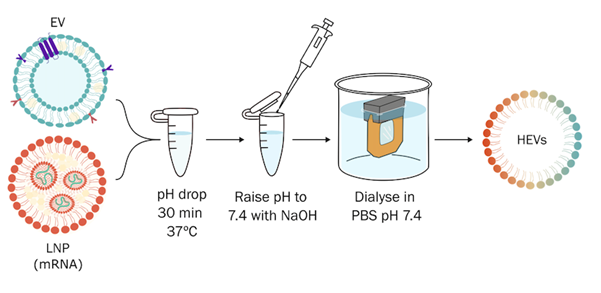
Fig 1: HEVs were created by fusing mRNA-loaded lipid nanoparticles with extracellular vesicles under controlled conditions1.
However, existing analytical techniques have limitations. Many commonly used methods analyse particles in bulk, reporting only average results across large populations. This makes it difficult to see differences between individual particles or to tell whether true hybrid particles have formed.
Single-particle techniques such as electron microscopy can reveal particle size and morphology but still provide little information on biochemical composition. Other single-particle methods rely on fluorescence labelling, which can alter the native state of the particles and introduce bias by focusing only on selected components.
Solution
To overcome these limitations, the researchers used SPARTA® (Single Particle Automated Raman Trapping Analysis). This technology combines optical trapping with Raman spectroscopy to analyse the chemical composition of single nanoparticles in a fully automated, high-throughput, non-destructive label-free process.
By analysing individual HEVs rather than bulk populations, SPARTA® reveals important particle-to-particle differences in HEV chemical composition. This made it possible to determine whether individual particles contained components from both EVs and LNPs, which would confirm hybridisation.
The Approach
Hybrid formation and mRNA loading were first assessed using complementary techniques, including particle sizing, nanoflow cytometry, and cryo-electron microscopy, which provided important information on particle size, structure, and the presence of mRNA.
SPARTA® was then used to examine particle composition at the single-particle level. Raman spectra were collected from large numbers of individual HEVs from two formulations (HEV F2 and HEV F5), alongside EV and two LNP controls (F2 and F5), allowing direct comparison between particle types.
First, a univariate analysis was performed, focusing on individual Raman peaks associated with proteins, lipids, and nucleic acids. This revealed how these components were distributed across individual HEVs and to assess heterogeneity within the hybrid population (Fig 2).
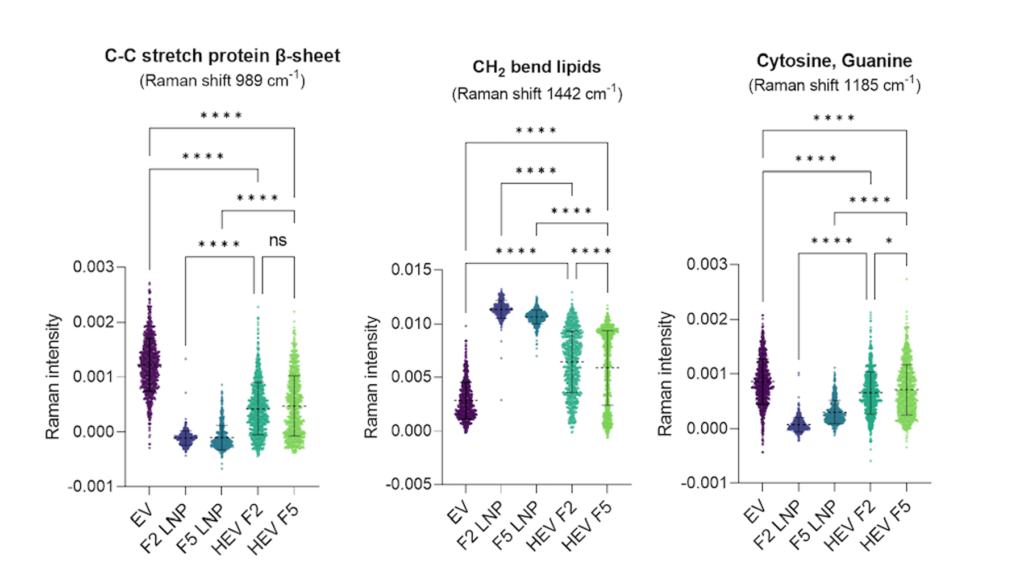
Fig 2: Univariate analysis of individual Raman peaks associated with proteins (left), lipids (middle) and nucleic acids (right) shows that HEVs display intermediate compositional profiles between EVs and LNPs, consistent with hybrid formation, and display substantial particle-to-particle heterogeneity. Each data point represents an individual particle measured by SPARTA®.1
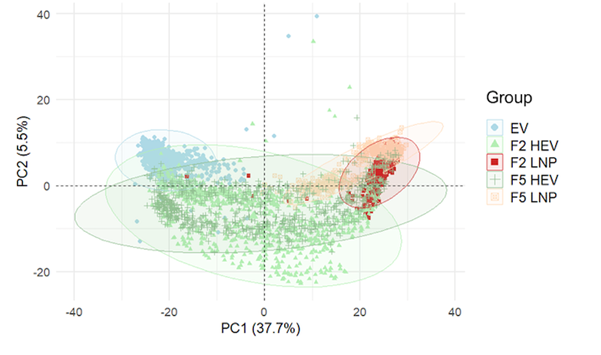
Multivariate analysis was also used to compare particles based on their overall chemical composition, using information from the full Raman spectral fingerprint for each particle. This analysis, in which each data point represents a single particle Raman spectrum, clearly separated EVs and LNPs into distinct clusters, with HEVs positioned between them. This confirms that hybrids form a distinct particle population with a mixed composition, containing features of both EVs and LNPs.
Fig 3: Multivariate Principal Component Analysis (PCA) of full Raman spectra shows EVs, LNPs and HEVs forming separate clusters, confirming HEVs hybrid composition.1
The Outcome
SPARTA® provided unique single-particle, label-free compositional analysis, enabling the researchers to:
- Confirm that EVs and LNPs had fused properly to form true HEVs, rather than mixtures of separate particles.
- Show that HEVs form a distinct particle population with a mixed composition, containing proteins, lipids, and nucleic acids from both EVs and LNPs.
- Reveal particle-to-particle compositional heterogeneity within the HEV population that would be hidden by bulk measurements.
- Analyse the relative composition of multiple components, such as lipids and proteins, label-free, preserving their native composition and avoiding bias and complications associated with labelling, for more reliable results.
Overall, through their analyses, the researchers found that HEVs created by fusing EVs with LNPs are an effective approach for delivering mRNA, overcoming the poor loading seen with EVs alone and enabling efficient delivery inside cells.